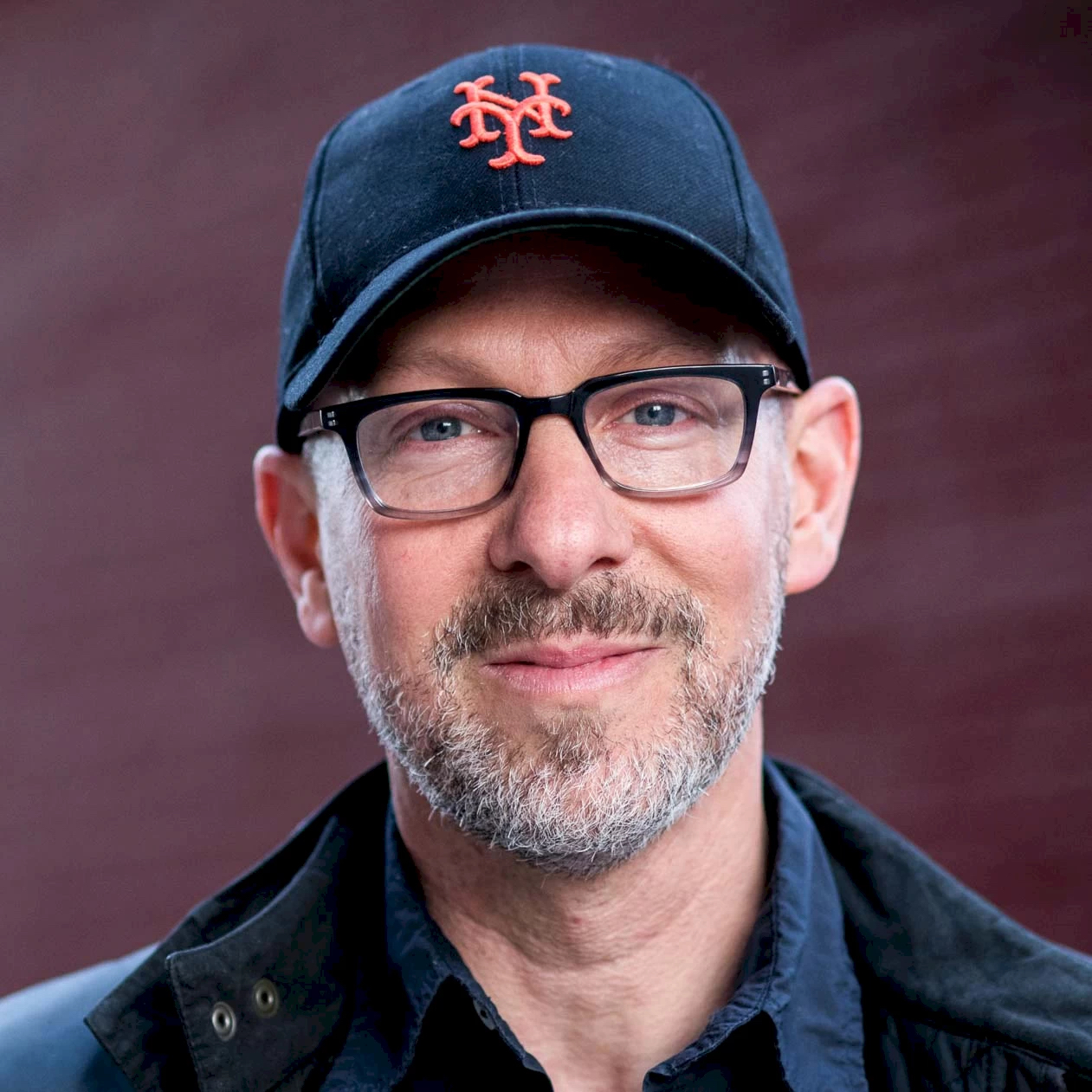
Here’s our latest interview with 2026 Oscar-winner Joshua Seftel.
1) Tell Breck Film your backstory. How and why did you get into filmmaking?
I grew up in upstate New York and experienced antisemitism at a young age. That included name-calling, kids throwing pennies at me, and even someone throwing a rock through the front window of our house. It was an early lesson in what it feels like to be othered, and it stayed with me.
As I became a filmmaker, I found myself drawn to stories about people who are often misunderstood, overlooked, or reduced to a single narrative. Across my work, whether documentaries, short film series like Secret Life of Muslims, or TV series work such as Queer Eye, I have been interested in creating space for people to be seen as fully human and complex.
I am especially drawn to underdog stories and stories with purpose. Not to lecture or persuade, but to build understanding. At its core, my approach has always been about listening, earning trust, and using storytelling to help bridge the distance between people.
2) How does making documentaries fuel you?
At least in documentaries, part of what makes a film great is feeling the sense that one is parachuting into other people’s lives, getting to know them, and gaining the privilege of hearing their story. I find that very human. Every time I journey the world and meet new people, it broadens my understanding of the world. Great documentary films uphold a responsibility to represent people and to tell their stories. I love the aspect of human contact and the opportunity to keep entering other people’s lives because I have this pass as a filmmaker.
3) What films have been the most inspiring or influential to you and why?
There have been many inspiring films along the way. I remember profoundly weeping when I saw Rob Epstein’s inspiring and heartbreaking film, The Times of Harvey Milk (1984), for the first time in college. It showed me just how powerful a retelling of a person’s life can be when you combine the right interviews with exceptional archival material and strong craft. The mournful trumpet in Mark Isham’s score still echoes in my head.
Director David Sutherland was my mentor and I learned so much from him. When I saw his artist portrait Paul Cadmus: Enfant Terrible at 80 (1984), I began to understand the power of composition, thorough planning, and incredibly high standards in documentary film. His documentary is crisp, revealing, quiet when it needs to be, and deeply personal. David would never accept anything less.
There’s also Mary Ellen Mark and Martin Bell’s Streetwise (1986), which I must have watched a dozen times when I first discovered it in college. The film chronicles the lives of children living on the streets of Seattle. It showed me the power documentary has to immerse the viewer in a world they might otherwise never know, and it made me want to explore and discover worlds far from my own.
My favorite of Ross McElwee’s films is Time Indefinite (1993). Coming up as a young filmmaker in Boston, I always looked up to McElwee and saw him as a role model. This film refined the style McElwee shared with the world in Sherman’s March, and his voice-over writing in this film still inspires me.
4) Do you think documentaries change the world?
What I strive for with my work, especially lately, is to try to tell stories that are for everybody. I hope to reach people who might strongly disagree with my opinions. I try to leave space for them as viewers. I hope that they might be affected by my work, prompted by it, or potentially, in a perfect world, have their heart softened. That is something that I dream of and strive for with my work.
For instance, All the Empty Rooms is a film about gun violence that never says the word “gun” in the whole film. That was by design. We wanted to make a film that people, no matter their opinion, no matter their political position, might sit and watch to the end and wouldn’t have a reason to turn it off. It’s really important to me to tell stories that aren’t just for people who agree with me, and to find connections between people.
5) How have you evolved as a filmmaker over your career?
Earlier in my career, I thought I knew how to tell a story and I did it in a certain way, and because of that, a lot of my earlier work probably felt very similar. Nowadays, I’m very open to every film being different from the one before. Now, I’m interested in treating each new film as a blank canvas. Depending on the topic, the people involved, and the story we’re telling, I’m open to doing something really different than the last one.
While in production, the idea of keeping an open mind and letting the topic and the material lead us excites me. All the Empty Rooms begged for a gentle unfolding, for space and quiet, room for contemplating and grieving. At one point we had a cut that was 34 minutes long, which was pretty tight, but we decided it just needed to breathe more. We cut six minutes of dialogue from the film. That still left it at 34 minutes, but we had added six minutes of silence. I think that made it better. I like the idea of really letting the story lead the creative.
About Joshua Seftel
Joshua Seftel is an Academy Award®-winning filmmaker and two-time Oscar® nominee driven by the conviction that storytelling can promote empathy, connection and change. That thread can be seen throughout his work going back over 35 years.
His latest documentary, All The Empty Rooms (Netflix), won a 2026 Oscar® and was executive produced by Adam McKay and NBA coach Steve Kerr. The film follows veteran CBS correspondent Steve Hartman on a secret project photographing the bedrooms left behind by children killed in school shootings. The result is a deeply emotional film that brings to life who these kids were and reframes gun violence from a political issue to a human issue.
Seftel lives in Brooklyn with his wife, filmmaker Erika Frankel, and their two young daughters.
Josh Seftel’s Recent Work + Social Media:
All the Empty Rooms (2026): https://www.netflix.com/title/82058494
Stranger at the Gate (2022): https://www.youtube.com/watch?v=GPbbl1S6foM
Instagram: @ jrseftel
Facebook: @ joshua.seftel // https://www.facebook.com/joshua.seftel/
LinkedIn: Joshua Seftel